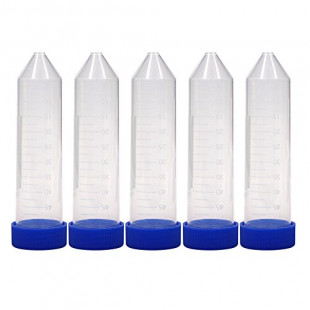
Centrifuge Tubes
R 29,48 – R 1 654,31
Price in ZAR, VAT inclusive. Bulk pricing on request.
Available pack sizes
- Nationwide delivery and export packing
- SDS and CoA available on request
- Supplied for laboratory and industrial use
Product description
Centrifuge tubes cover the everyday needs for sample storage and centrifugation in a lab. Made of high quality, clear polypropylene (PP), Capp tubes for centrifuge are also autoclavable. The recommended sterilization procedure for RLS autoclavable centrifuge tubes is 20 minutes at 121°C. RLS tubes for centrifuge are available in 2 volumes: 15 mL and 50 mL. The 50 mL version of RLS sterile centrifuge tubes is additionally available as skirted (self-standing) and non-skirted tube. RLS autoclavable centrifuge tubes have visible graduation marks and can withstand up to 16.000 RCF
Description
- Tubes are used in laboratory centrifuges, machines that spin samples in order to separate solids out of liquid chemical solutions
- Tubes are essential items for the isolation, stratification or density-gradient separation of samples when using centrifuges and microcentrifuges
- Plastic centrifuge tubes may be manufactured from polyethylene terephthalate, polypropylene, polypropylene copolymer, polycarbonate or polystyrene.
- Polypropylene and PPCO tubes are autoclavable and provide excellent chemical resistance combined with good mechanical strength. Polycarbonate, PET and polystyrene offer exceptional optical clarity and disposability.
- Plastic tubes are also manufactured in tinted versions to protect light-sensitive samples.
- Tubes, also called centrifuge tips, are placed within the centrifuge and spun at very high velocity for a set amount of time
- They find multiple applications throughout biology (especially cell culture and microbiology), chemistry, clinical healthcare and the wider industrial environment
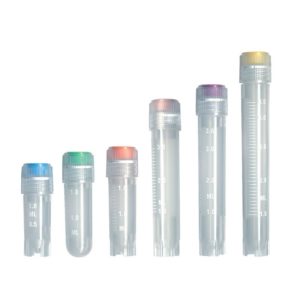
- Tubes come in a range of shapes and styles, including round bases for general purpose applications, or conical bases to permit easier sample or pellet retrieval after spin-down. Others can be self-standing with a flat base.
- Tubes may also be graduated with a write-on patch for easy labelling and identification, and many intended for cell culture applications are supplied sterile
Length
- The 15 ml tube dimensions are 17 mm x 120 mm long and
- The 50 ml tubes are 30 mm x 114 mm long
Capacity
- Tubes can be safely centrifuged to approximately 3,200 × g (50 mL size)
- Also 3,500 × g (15 mL size) depending on the specific gravity of the solution being centrifuged and the type of rotor
How to use centrifuge tube
- Ensure all sample tubes are evenly filled
- For each tube inserted in the rotor, add a tube of equal weight directly opposite it
- Rotate the rotor 90° and add two additional tubes directly opposite one another
- Repeat the process
Need bulk or export quantities?
We supply Centrifuge Tubes in drum, IBC and container quantities with documentation for cross-border shipments.
- Volume pricing tiers
- CoA, SDS & export docs
- Scheduled call-off supply
Centrifuge Tubes — frequently asked questions
Pricing, pack sizes, documentation and delivery answers for buyers sourcing this product.